
Zygomatic Implants: Fixed Teeth for Severe Upper Jaw Bone Loss
Many people are told they cannot have dental implants because the bone in their upper jaw has shrunk too much. After years of wearing dentures, long-standing gum disease or tooth loss, the upper jaw can become thin and the sinus can sit very low, leaving little bone to hold a conventional implant.
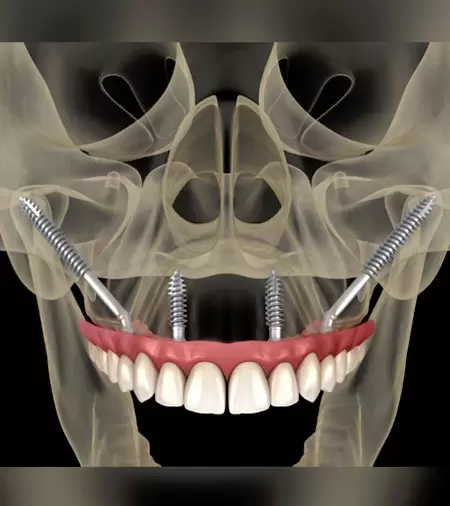
Zygomatic implants are a specialised answer to that problem. Instead of relying on the weak upper jaw, they anchor in the dense cheekbone (the zygoma), which makes a fixed set of teeth possible for patients who were previously offered only loose dentures or repeated bone-grafting surgery.
What are zygomatic implants?
A zygomatic implant is a long titanium implant, much longer than a standard one. It is placed through the upper jaw and engages the zygomatic bone, the strong cheekbone that sits beside the sinus. Because the cheekbone is dense, it can support the implant even when the jaw bone is severely reduced.
Usually two zygomatic implants are placed on each side, sometimes combined with regular implants at the front of the jaw where some bone remains. A single fixed bridge is then attached on top, giving a full arch of teeth.
Zygomatic implants are considered when conventional implants are not realistic. Typical situations include:
- Advanced bone loss in the upper jaw after long-term denture use or extractions
- Sinuses that have expanded downward, leaving too little bone height
- Failed or insufficient sinus lift and bone-grafting in the past
- Loss of bone after gum disease or following removal of a jaw lesion
- A strong wish for a fixed solution and for fewer surgeries
Suitability depends on your general health, the quality of your cheekbone and sinus health. A 3D scan is essential. Smokers, people with uncontrolled diabetes and those with active sinus infection need careful assessment first.
How the treatment is planned
Planning starts with a detailed examination and a cone beam CT scan, which shows the volume of bone, the position of the sinus and the shape of the cheekbone in three dimensions. From the scan, the team plans the angle and length of each implant, decides how many implants are needed and designs the final bridge. Planning the teeth first and the implants second helps the result look and function naturally.
Possible risks you should know about
Zygomatic implant surgery is a specialist procedure. Possible risks include sinus inflammation, swelling, infection, temporary numbness and, rarely, implant failure. Choosing an experienced team, a careful 3D plan and consistent follow-up reduces these risks, and your dentist should discuss them openly before you decide.