
Root Canal Retreatment Under a Microscope: Saving a Tooth That Has Not Healed
A root canal is meant to remove infection and let a tooth stay in your mouth for many years. Occasionally, though, a treated tooth continues to hurt, develops a gum boil or shows a dark area on the X-ray months or years later. This does not always mean the tooth is lost. Root canal retreatment, especially when performed with a dental operating microscope, gives many of these teeth a second chance.
Root canals are complicated. The inside of a tooth is a network of tiny channels, and infection can survive wherever cleaning does not reach. Common reasons for failure include:
- A missed or hidden canal, particularly in upper molars
- Canals that were not fully cleaned, shaped or sealed
- Leakage of bacteria through a loose or broken crown or filling
- A new cavity or crack developing after the first treatment
- A delay between the root canal and the permanent restoration
Signs that retreatment may be needed
Some failed root canals cause no symptoms at all and are picked up only on a routine X-ray, which is why follow-up scans after treatment matter.
- Persistent or returning pain, tenderness on biting or pressing
- A pimple-like swelling on the gum that comes and goes
- Swelling of the gum or face around the tooth
- A darkened or fractured tooth
- An X-ray showing a lesion at the root tip that has not healed
The retreatment procedure
- Examination and X-rays or a limited 3D scan to assess the tooth and the surrounding bone.
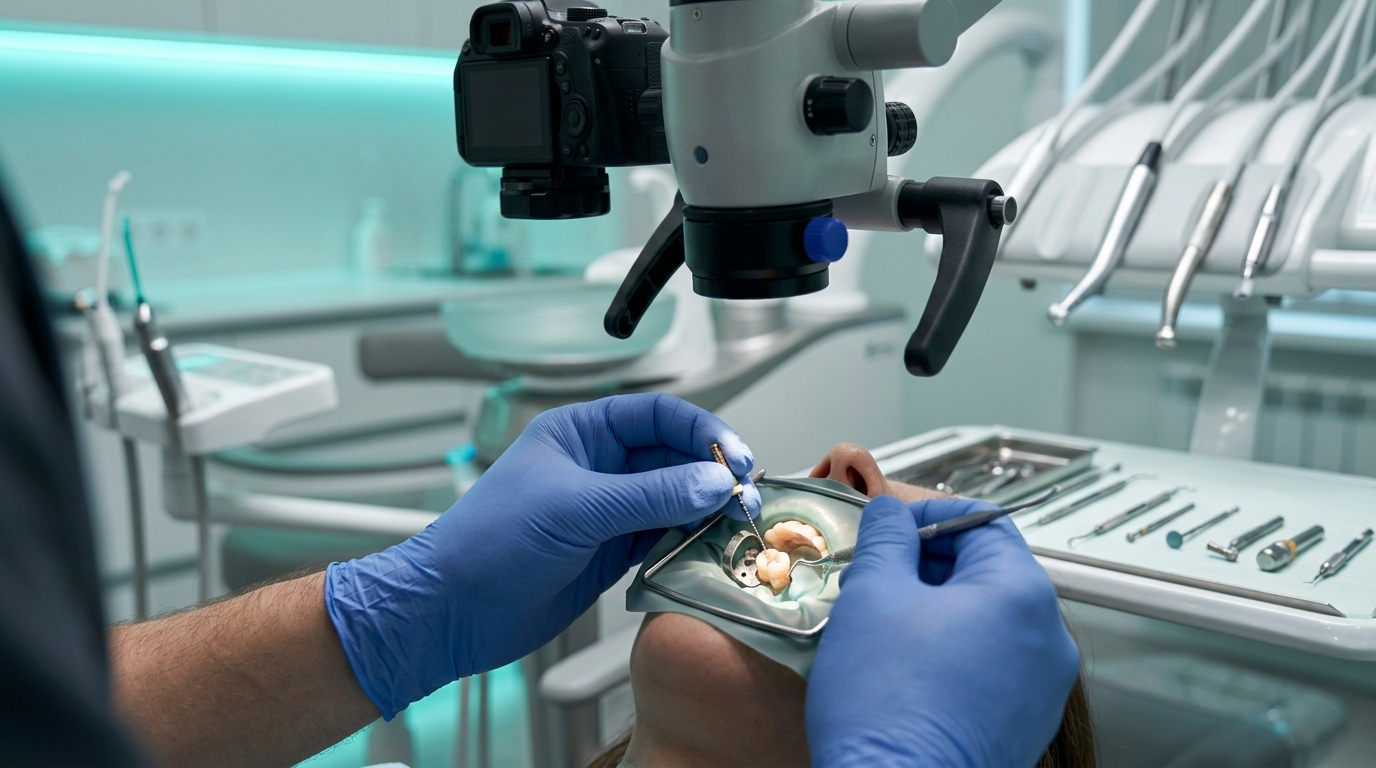
- Local anaesthesia and isolation of the tooth with a rubber dam to keep it clean.
- Removal of the existing crown, post or filling if access is required.
- Removal of the old root filling and careful search for missed canals under magnification.
- Thorough cleaning and disinfection of the canal system.
- A fresh, sealed root filling, followed by a well-fitting permanent restoration or crown.
Caring for the tooth afterwards
Have the final crown or filling placed promptly, because a delay lets bacteria re-enter. Mild tenderness for a few days is common. Keep cleaning well, avoid chewing hard items on that side until restored, and attend your review X-ray so that healing can be confirmed.