
5 Signs You May Need a Root Canal Treatment
The words "root canal" tend to make people nervous — but the treatment itself is far less intimidating than its reputation, and it's often the very thing that saves a tooth from extraction. The real danger isn't the treatment; it's ignoring the warning signs and letting an infection spread. Here are five signs it may be time to get checked.
Persistent or Throbbing Tooth Pain
Occasional sensitivity is normal, but pain that lingers for days, worsens at night, or throbs without an obvious trigger often points to inflammation or infection deep inside the tooth — inside the pulp, where the nerves and blood vessels live.
Sensitivity to Hot or Cold That Lingers
Feeling a quick twinge from ice cream or hot coffee is common. But if the sensitivity lingers for 30 seconds or more after the hot or cold stimulus is gone, it can be a sign that the nerve inside the tooth is damaged or infected.
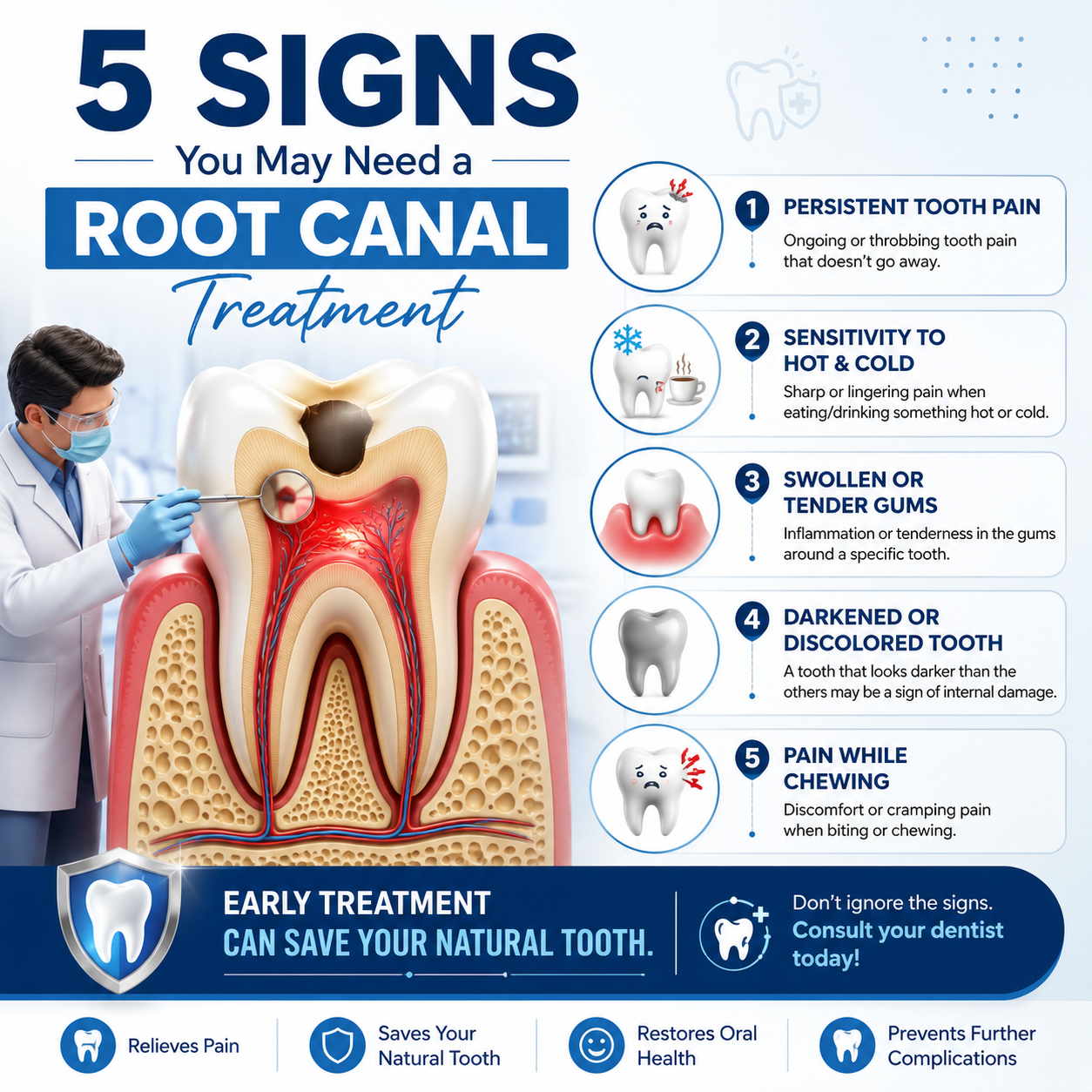
Swollen or Tender Gums
Swelling, tenderness, or a small pimple-like bump on the gum near a specific tooth can indicate an abscess — a pocket of infection at the root tip. This is one of the clearer signs that the issue has moved beyond the enamel and into the tooth's inner structure.
Tooth Discoloration
A tooth that has darkened — turning grey, yellow, or almost black compared to the teeth around it — may indicate that the internal tissue has died, often due to trauma or untreated decay. Discoloration alone isn't always painful, which is why it's easy to overlook.
Pain When Chewing or Applying Pressure
If biting down or even light pressure on a specific tooth causes a sharp or dull ache, it often means the infection has reached the tissue surrounding the root, which becomes sensitive to pressure.
Why Early Treatment Matters
A root canal removes the infected or inflamed pulp, cleans the inside of the tooth, and seals it — relieving pain and allowing you to keep your natural tooth rather than losing it to extraction. Left untreated, the infection can spread to the jawbone and surrounding teeth, leading to more complex and costly treatment down the line.
Don't Wait Out the Pain
If you're experiencing any of these signs, the best step is a prompt evaluation — an X-ray can confirm whether a root canal is needed before the problem worsens. Modern root canal treatment is typically no more uncomfortable than getting a filling, and it's one of the most effective ways to save a natural tooth.
Call to action: Experiencing any of these symptoms? Book an appointment with us today for a prompt evaluation and pain relief.