
Platelet-Rich Fibrin (PRF): Using Your Own Blood to Support Healing in Dental Surgery
Healing is the foundation of every surgical result, whether it is a tooth extraction, an implant or a gum procedure. Platelet-rich fibrin, or PRF, is a technique that uses a small sample of your own blood to give the surgical site a natural boost.
Because it is made from the patient's own blood, PRF is a biologic material with no added chemicals, and it has become a regular part of modern implant and periodontal surgery.
What is PRF?
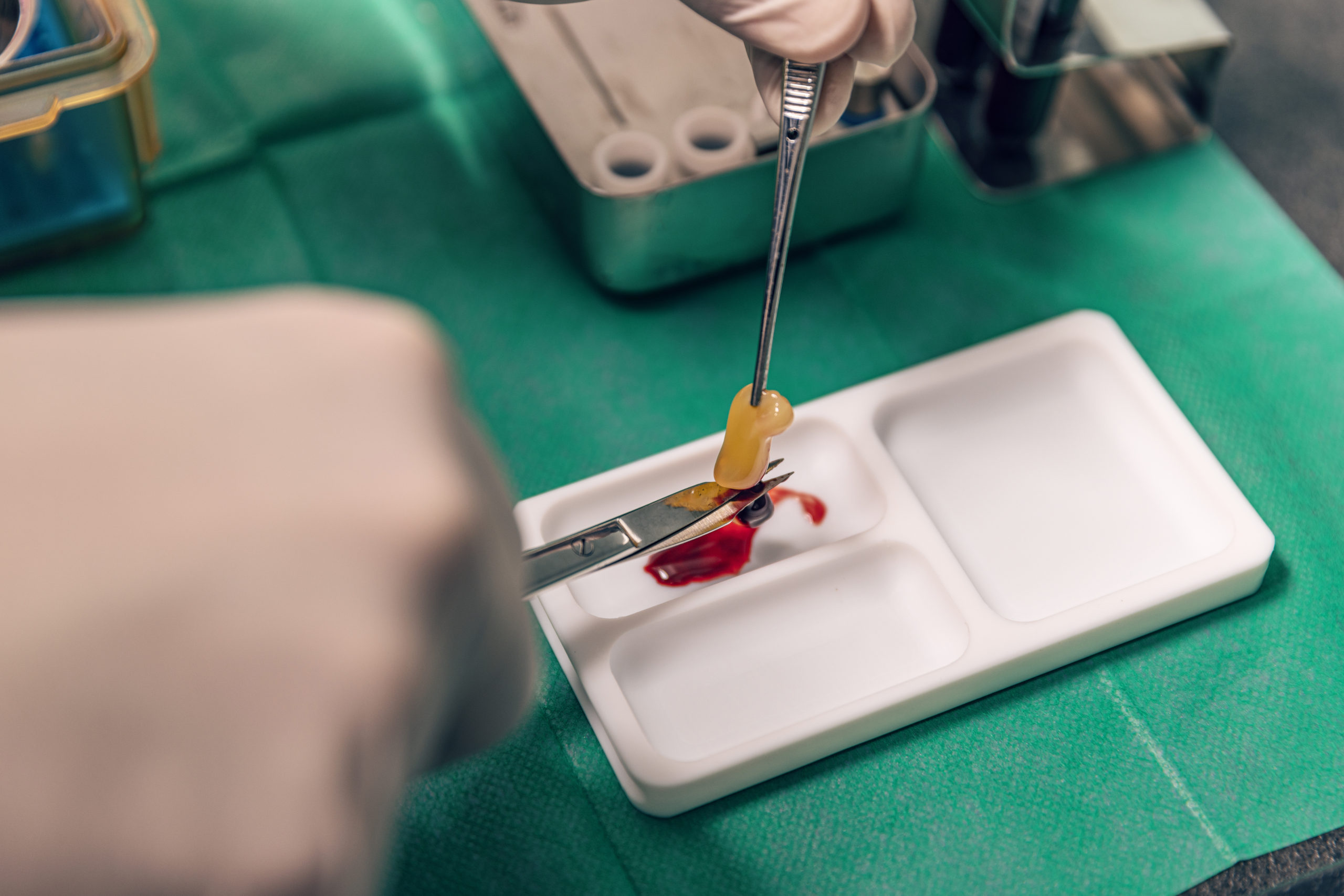
PRF is a concentrate of the healing components found in blood. A small amount of blood, similar to a routine blood test, is drawn and spun in a centrifuge. The spinning separates the blood into layers, and the layer containing platelets, white cells and a fibrin network is collected.
The result is either a soft, flexible clot-like membrane or plug, or a liquid form often called injectable PRF (i-PRF). The platelets release growth factors, and the fibrin acts as a scaffold that supports new tissue.
How is PRF different from older PRP?
Platelet-rich plasma (PRP) was an earlier technique that needed anticoagulants and a more complex preparation. PRF is prepared without additives and forms a natural fibrin matrix, which holds growth factors in place and releases them gradually while healing proceeds.
Where PRF is used in dentistry
- Extraction sockets: placed in the socket to support clot stability and soft tissue healing, especially after wisdom tooth surgery
- Socket preservation and implants: mixed with bone graft particles or used as a membrane to support bone regeneration
- Sinus lifts: combined with graft material, as discussed in our article on bone grafting and sinus lift
- Gum recession: used alongside grafting techniques to support soft tissue healing, see gum grafting
- Periodontal defects and cysts: placed in bony defects after cleaning
- Oral wounds and dry socket management: used to cover and protect tissues in selected situations
What to expect during the procedure
- A small blood sample is taken at the start of the appointment.
- The tubes are placed in the centrifuge for several minutes.
- The PRF is collected and shaped into a plug, membrane or mixed with graft material.
- After the dental procedure, PRF is placed in the treated area and the tissue is closed with sutures.
- The extra time added to the appointment is usually short, and no extra surgical site is needed.
Benefits patients commonly notice
• Comfort: many patients experience less post-operative discomfort and swelling, although individual experience varies
• Supported soft tissue healing around surgical sites
• A natural, biocompatible material from your own blood, which avoids the risk of rejection
• Support for bone graft stability and regeneration
Research on PRF continues to evolve, and results depend on the case, the technique and the patient's general health. It supports the surgery rather than replacing sound surgical technique.