
10 Everyday Oral Hygiene Tips to Prevent Cavities and Gum Disease
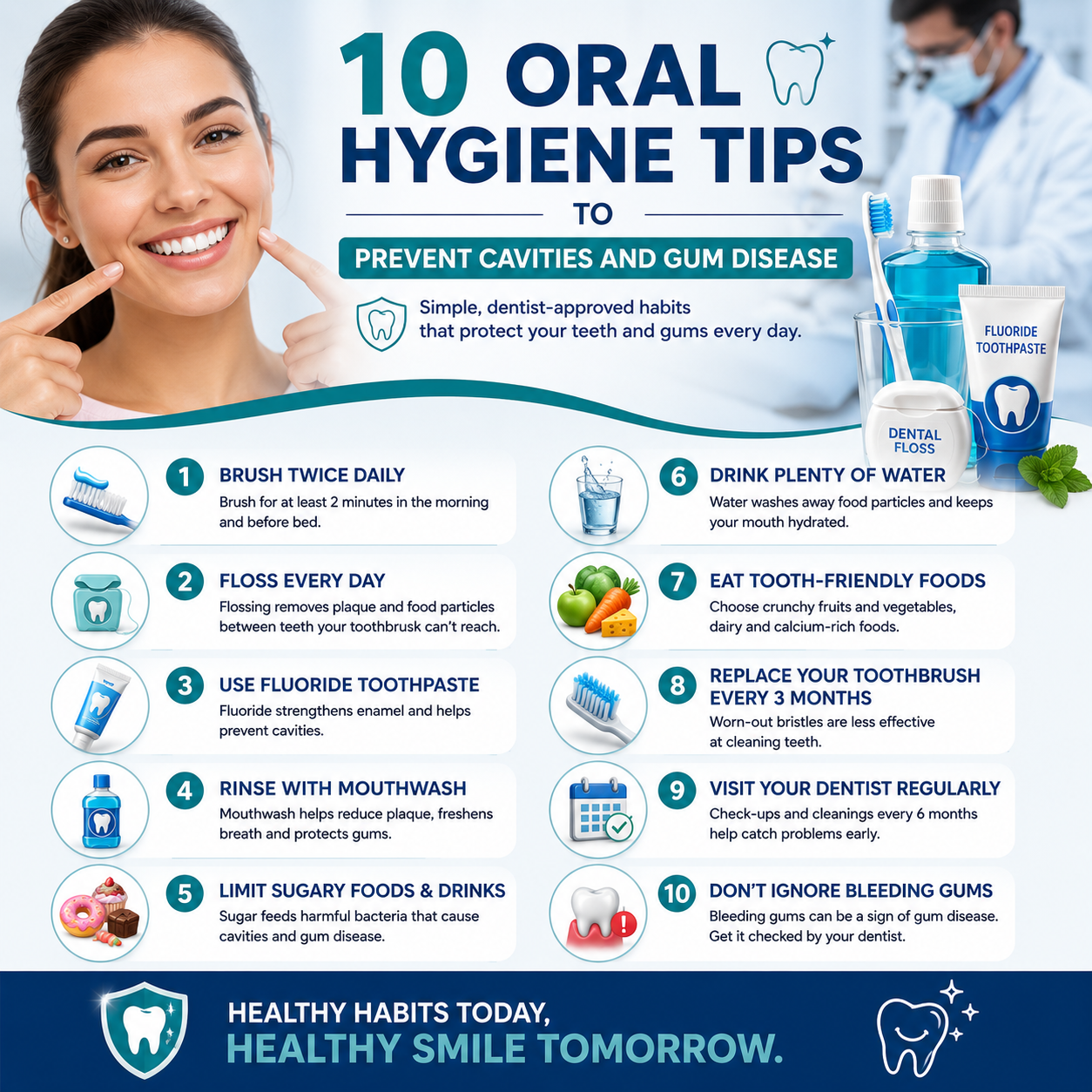
Most cavities and gum disease don't happen overnight — they build up slowly, from small daily habits that go unnoticed until a check-up reveals the damage. The good news: preventing both is largely within your control, and it doesn't require anything complicated. Here are ten simple habits that make the biggest difference.
Brush Twice a Day — The Right Way
Brushing isn't just about frequency; technique matters. Use a soft-bristled brush at a 45-degree angle to the gumline, in gentle circular motions, for a full two minutes — rushing through it leaves plaque behind, especially along the gums and back teeth.
Don't Skip Flossing
Brushing alone can't reach between teeth, where plaque and food particles build up and eventually harden into tartar. Daily flossing removes this before it can cause decay or irritate the gums.
Use Fluoride Toothpaste
Fluoride strengthens enamel and makes teeth more resistant to acid attacks from bacteria and sugar. Unless advised otherwise by your dentist, a fluoride toothpaste should be a non-negotiable part of your routine.
Limit Sugary and Acidic Foods
Sugar feeds the bacteria that produce the acid responsible for cavities, while acidic foods and drinks (citrus, soda, sports drinks) can gradually erode enamel. You don't have to eliminate them — just be mindful of frequency, and rinse with water afterward when possible.
Saliva is your mouth's natural defence system — it washes away food particles and neutralises acid. Drinking water throughout the day, especially after meals, supports this natural process, particularly if you don't have the chance to brush right away.
It sounds counterintuitive, but brushing right after consuming acidic foods or drinks can actually spread softened enamel. Wait about 30 minutes to let your saliva neutralise the acid first.
Replace Your Toothbrush Regularly
A worn-out toothbrush — bristles frayed or splayed — cleans far less effectively. Replace it every three to four months, or sooner if you've been unwell.
Don't Ignore Bleeding Gums
Gums that bleed during brushing or flossing are often an early sign of gingivitis, the earliest stage of gum disease. It's reversible with better hygiene and professional cleaning — but only if it's addressed early rather than dismissed.
Consider a Mouth Rinse
An antibacterial or fluoride mouth rinse can add an extra layer of protection, especially in areas brushing and flossing might miss. It's a helpful addition — not a replacement — for brushing and flossing.
Visit Your Dentist Every Six Months
Even excellent home care can't catch everything. Regular check-ups and professional cleanings catch problems — like early decay or tartar buildup — long before they become painful or expensive to treat.
Small Habits, Lasting Results
None of these tips require a drastic lifestyle change — just consistency. Combined with regular dental visits, they're the most effective, low-cost way to protect your smile for years to come.
Call to Action: Due for a check-up? Book your next cleaning and exam with us and keep your smile in top shape.