
Invisible Aligners vs. Traditional Dental Braces: What's the Real Difference?
Straightening your teeth is a big decision, and today you have more options than ever. The two most popular choices — traditional metal braces and invisible (clear) aligners — both work, but they work very differently.
Here's what actually sets them apart, so you can choose the option that fits your lifestyle, budget, and smile goals.
Appearance
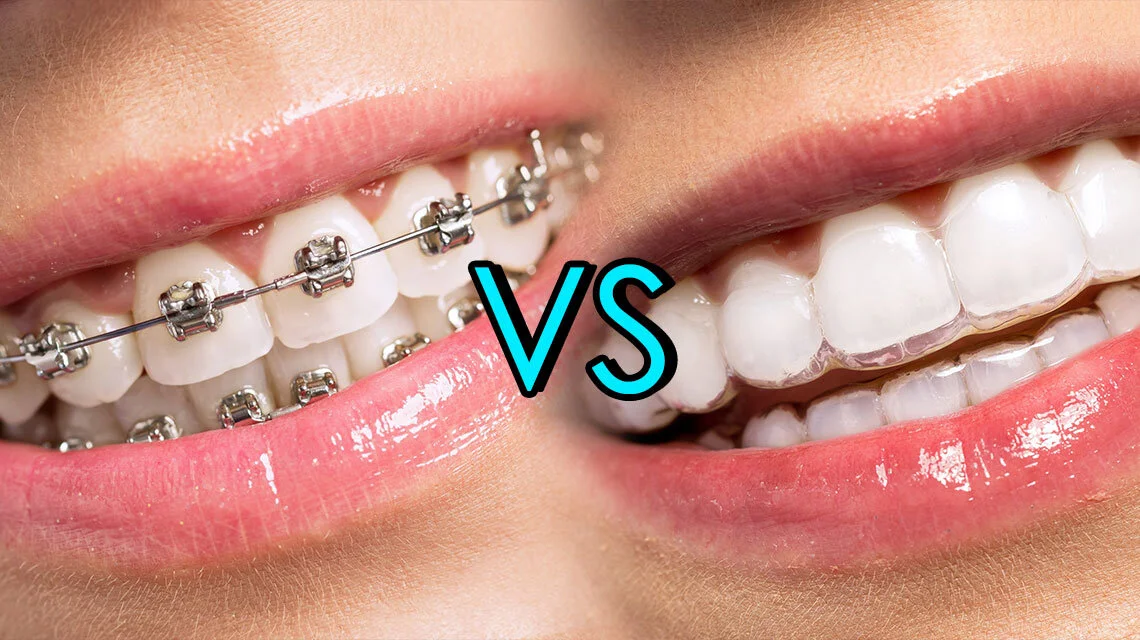
Traditional braces use metal or ceramic brackets bonded to each tooth, connected by a wire—visible whenever you smile or speak.
Invisible aligners are clear, custom-made trays that fit snugly over your teeth and are barely noticeable in photos or conversation. For image-conscious teens and working professionals alike, this is often the deciding factor.
Comfort and Daily Life
Braces are fixed in place for the entire treatment and can cause irritation to the cheeks and lips, especially after adjustments. Aligners are smooth plastic, generally more comfortable, and because they're removable — you can take them out to eat, brush, and floss normally.
The trade-off: aligners require discipline. They need to be worn 20–22 hours a day to stay on schedule, and it's easy to lose track of them if you're not consistent.
Treatment Time and Suitability
Braces remain the more versatile option and can correct complex bite issues, severe crowding, and significant jaw misalignment that aligners may not fully address. Invisible aligners work best for mild to moderate alignment issues and tend to show results faster in straightforward cases — often within 6 to 18 months, depending on the case. Not every smile is a candidate for aligners. A proper consultation and dental scan is the only way to know which treatment will give you the result you actually want.
Maintenance and Diet
With braces, certain foods — sticky, hard, or chewy — are off-limits for the duration of treatment, and cleaning around brackets takes extra effort. Aligners are removed before eating, so there are no food restrictions, and brushing/flossing stays simple since there's no hardware to clean around.
Cost Considerations
Cost varies by case complexity and treatment length rather than by the technology alone. In many cases, aligners and braces fall in a similar price range, though aligners can cost more for complex corrections that need extended wear. We provide a transparent cost breakdown at your consultation — no surprises.
Which One Is Right for You?
There's no universally "better" option — only what's better for your teeth, your goals, and your daily routine. The best way to find out is a personalised consultation, where we assess your bite, review your goals, and recommend the option that will give you the healthiest, most confident smile in the least amount of time.