
Immediate Implants and Socket Preservation: Protecting Bone After Tooth Extraction
When a tooth is removed, the bone and gum that supported it begin to shrink. The most noticeable change happens in the first months, and it can leave a hollow area that makes a future implant harder and the final result less natural.
Two modern approaches deal with this directly: placing an implant at the time of extraction (an immediate implant) or filling the socket to protect the bone while healing (socket preservation).
What happens to bone after extraction?
Bone exists to support teeth. Once the tooth is gone, the bone gradually resorbs, and the outer wall of the socket, which is especially thin at the front of the mouth, is lost quickly. Gum contours flatten, and the loss of width and height can complicate implant placement and affect appearance.
Immediate implant placement
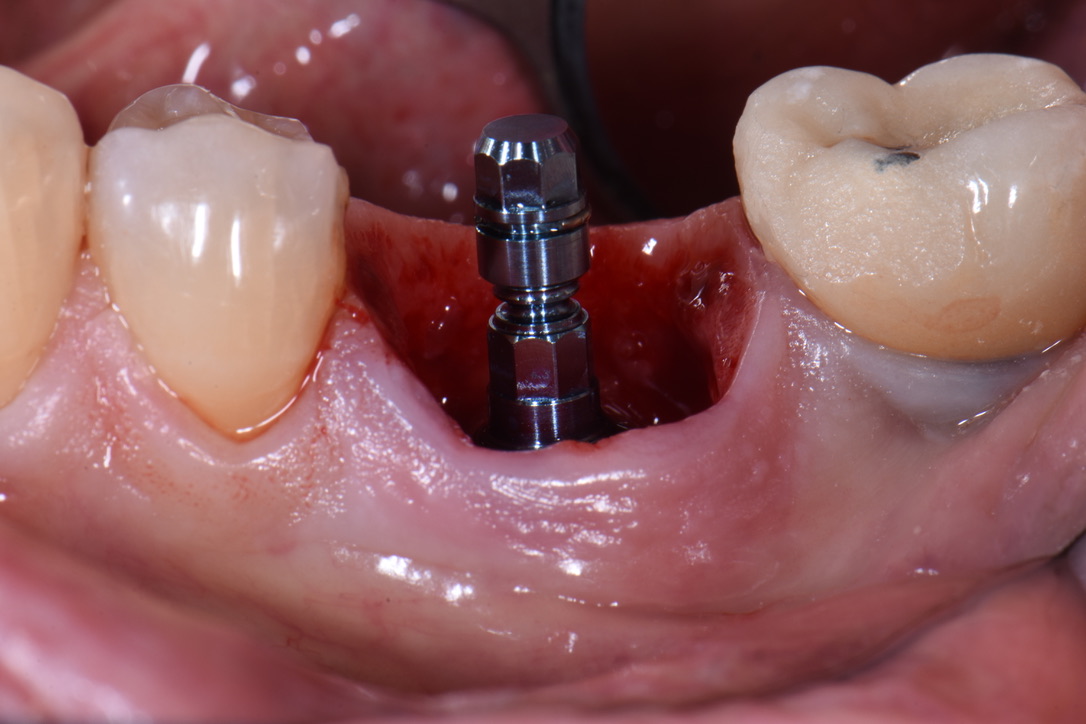
In suitable cases the damaged tooth is removed and an implant is placed in the same appointment, often with a temporary crown fitted on the same day for the front teeth.
Advantages
- Fewer surgeries and a shorter overall timeline
- Supports the gum and bone shape from the start
- A temporary tooth can avoid a gap in the smile
- Often less overall discomfort than separate procedures
Socket preservation (ridge preservation)
When an immediate implant is not suitable, the socket is cleaned after extraction and filled with a bone graft material. It is covered with a membrane or a soft tissue seal, and sometimes with PRF to support healing. The graft protects the shape of the ridge, so that an implant can be placed after healing, usually a few months later.
More extensive defects might need larger grafting procedures, including those described in our article on bone grafting and sinus lift.
Comparing the two
- Timing: immediate implants are placed on the day of extraction, while preservation is followed by a waiting period before the implant
- Suitability: immediate placement needs good stable bone, whereas preservation suits sockets with infection, missing walls or poor primary stability
- Appearance: both aim to maintain the gum and bone contour, and your dentist will choose based on a scan
- Predictability: in a difficult site, delaying the implant can be the safer choice
Recovery and aftercare
Keep the area clean, avoid chewing on the site, follow a soft diet, and take medication as prescribed. A temporary tooth on an immediate implant is shaped to avoid biting forces, and heavy chewing on it should be avoided. Smoking slows healing and raises the risk of failure, so it should be stopped or minimised.