
Gum Grafting and Gum Recession Treatment: Protecting Exposed Roots
Receding gums develop slowly, so many people don't notice until teeth look longer or start to feel sensitive. Because gum tissue doesn't grow back on its own, recession is one of those conditions worth catching early. Here is how it is assessed and treated.
What Is Gum Recession?
Gum recession is the loss of gum tissue that exposes the root of the tooth. Roots aren't protected by enamel, so they are more prone to sensitivity, decay and wear.
What Causes It?
- Aggressive brushing with a hard brush or heavy pressure
- Gum (periodontal) disease, which destroys supporting tissue and bone
- Thin or delicate gum tissue that runs in some families
- Teeth position: teeth that sit out of the bony ridge often have thinner gum coverage
- Orthodontic movement in a thin-gum patient
- Tobacco use
- Grinding or clenching, which may contribute
- Lip or tongue piercings rubbing on gums
- Poor oral hygiene allowing plaque and tartar to build up
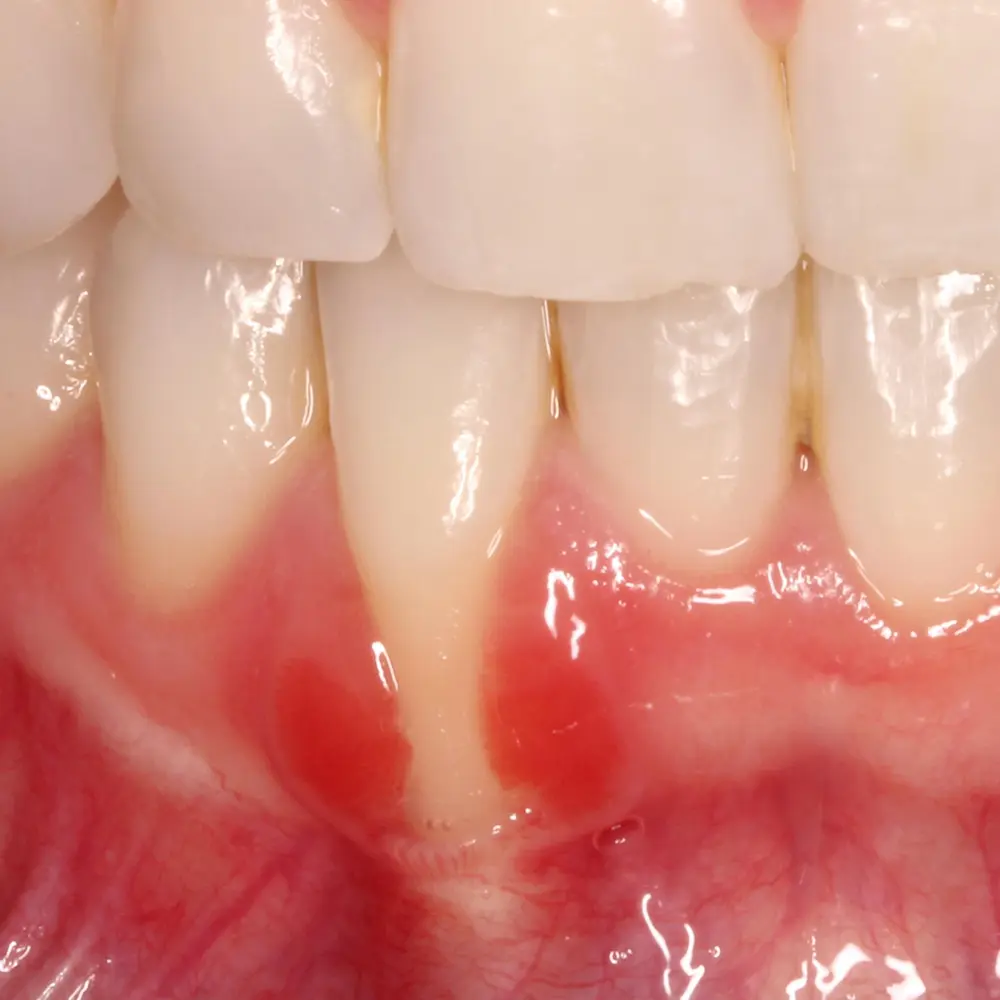
What Happens During a Gum Graft?
- Local anaesthesia is given and the roots are cleaned and smoothed.
- Graft tissue is taken from the palate or prepared from a substitute.
- The tissue is placed over the exposed root and secured with fine stitches.
- A protective covering may be placed on the palate site.
Prevention
- Use a soft-bristled brush with light pressure
- Ask your dentist to check your brushing technique
- Treat gum disease promptly
- Wear a night guard if you grind
- Avoid tobacco
- Keep up with regular dental check-ups
Recovery
- Discomfort for several days, particularly at the palate site, managed with prescribed medication
- A soft, cool diet initially
- No brushing on the treated area until advised; a medicated rinse may be used instead
- Avoid pulling on the lip to look at the area
- Most soft tissue healing occurs over a few weeks, with maturation continuing for months.