
Dental Veneers
Not every smile concern needs a full restoration — sometimes a thin, custom-made shell is all it takes to transform how your teeth look. Dental veneers are one of the most popular cosmetic dental treatments for exactly this reason. Here's what they involve.
What Are Dental Veneers?
Veneers are thin, custom-made shells — typically made of porcelain or composite resin — that are bonded to the front surface of a tooth. They're designed to improve the color, shape, size, or alignment of teeth without the more extensive work a crown would require. Porcelain veneers are more stain-resistant and durable, while composite veneers are quicker to apply and more affordable, though they don't last as long.
Why Do People Choose Veneers?
Veneers are popular because they address several cosmetic concerns at once:
- Discoloration or staining that doesn't respond well to whitening treatments
- Chips or minor cracks in the front teeth
- Gaps between teeth that don't require full orthodontic treatment
- Slightly misaligned, uneven, or worn-down teeth
- Irregularly shaped or unusually small teeth
Because veneers only cover the visible front surface, they can create a natural, uniform smile with relatively minimal alteration to the tooth compared to a crown.
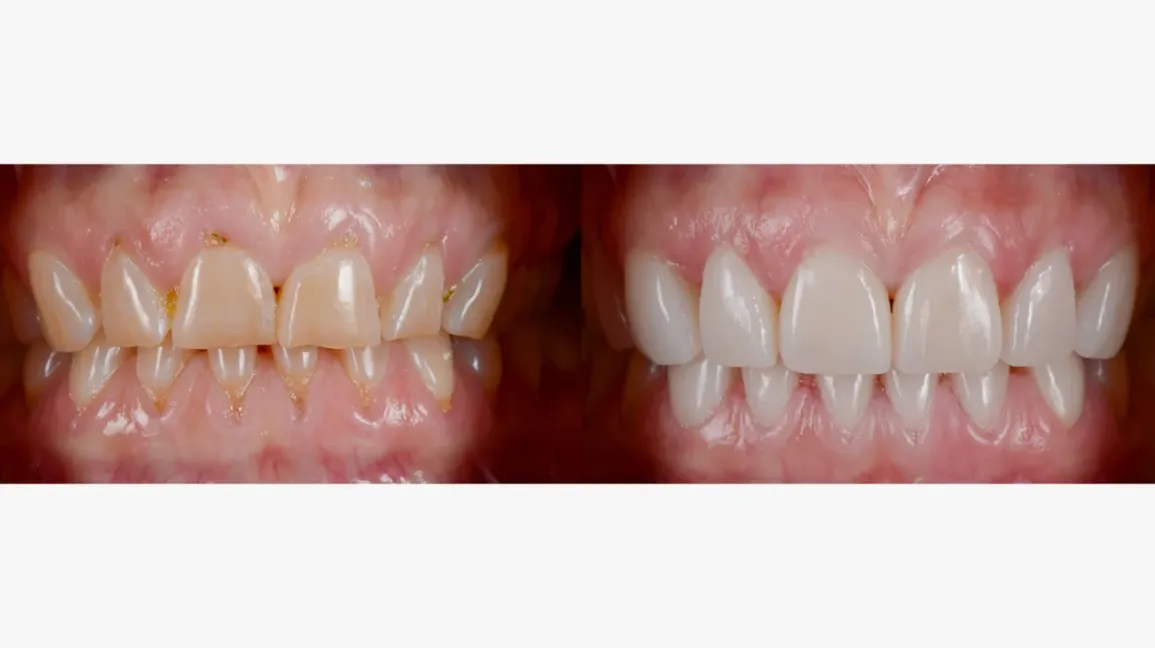
When Should You Consider Veneers?
Veneers are worth exploring if:
- Your teeth are structurally healthy, with no untreated decay or gum disease
- You're looking for a cosmetic improvement rather than a structural fix
- You want a faster route to a uniform smile than orthodontic treatment would offer
- Whitening alone hasn't achieved the shade or evenness you're looking for
- You have minor chips, gaps, or shape irregularities you'd like corrected
Veneers aren't usually recommended for teeth with significant decay, weak enamel, or those needing major bite correction — in those cases, a dentist may suggest crowns, bonding, or orthodontics instead.
What Does the Process Involve?
1. Consultation — the dentist evaluates your teeth and discusses your goals and the type of veneer suited to you
2. Preparation — a small amount of enamel is typically removed from the front of the tooth to make room for the veneer
3. Impression or digital scan — used to custom-fabricate the veneer (for porcelain veneers, this may involve a temporary veneer while the permanent one is made)
4. Bonding — the veneer is checked for fit and color match, then permanently bonded to the tooth
Composite veneers can often be sculpted and applied directly in a single visit, while porcelain veneers usually take two visits due to lab fabrication.
• Avoid biting excessively hard foods (ice, hard candy) that could chip the veneer
• Maintain regular brushing and flossing, treating veneers like natural teeth
• Limit heavily staining foods and drinks, especially with composite veneers
• Wear a nightguard if you grind your teeth, to protect the veneers from excess pressure
• Keep up with regular dental check-ups to monitor the veneer's condition