
Clear Aligner Treatment: Straightening Teeth Without Metal Braces
Crowded, spaced or crooked teeth are not only a cosmetic concern. They can trap plaque, strain the bite and make cleaning harder. Many adults and teenagers want straighter teeth but hesitate at the thought of metal braces.
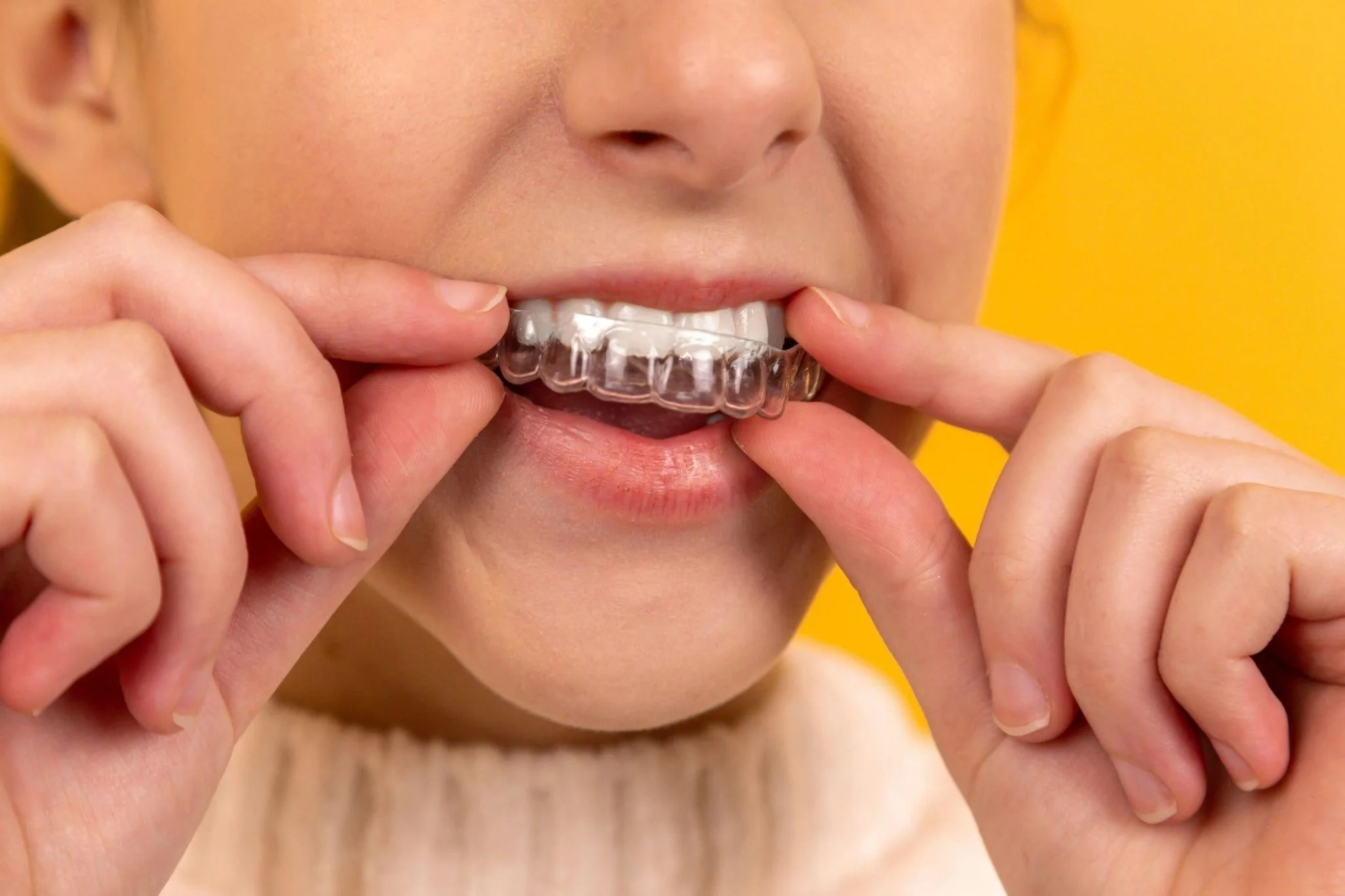
Clear aligners are a series of custom-made, transparent trays that move teeth gradually, and are removable for eating and cleaning. They are one of the most popular modern orthodontic options when the case is right for them.
How clear aligners work
A digital scan of your teeth is used to plan the complete movement from the starting position to the final result. A series of trays is made, and each one moves the teeth by a small, controlled amount. You usually change to the next tray every one to two weeks, as advised by your dentist, and wear them for most of the day, commonly around 20 to 22 hours.
Which problems can aligners correct?
- Mild to moderate crowding and spacing
- Gaps between front teeth
- Some bite problems such as deep bite, crossbite and open bite, depending on severity
- Relapse after earlier braces
- Alignment before restorative work such as veneers, crowns or implants
More complex jaw discrepancies, severe rotations or certain tooth movements may need fixed braces, or a combination of both, and an honest assessment from the start is important.
Planning: scans, photographs and a treatment simulation
Treatment begins with examination, X-rays, photographs and a digital scan, which replaces uncomfortable impression material. Using 3D software, the team shows a simulation of how teeth are expected to move and the estimated treatment time, so that you know the planned result before starting. Cases involving the smile line may also be previewed with digital smile design.
Advantages of clear aligners
- Nearly invisible, which suits professionals and adults
- Removable for meals, brushing and flossing, which keeps gum health easier to maintain
- No metal brackets or wires to irritate the cheeks
- Fewer emergency visits for broken brackets
- A visible plan and progress from the beginning
Aligners and gum health
Teeth should not be moved when there is active gum disease or untreated decay, so a dental health check comes first. Good gum health also supports stable results, and our article on gum recession explains why thin gums need attention before and during orthodontic movement.