
Bone Grafting and Sinus Lift: Rebuilding Bone So Dental Implants Can Succeed
A dental implant is only as reliable as the bone that holds it. After a tooth is lost, the jawbone in that area starts to shrink because it no longer receives chewing stimulation. When too little bone remains, the answer is often to rebuild it before, or during, implant placement.
Why Does Bone Disappear?
Tooth loss: the ridge can lose a noticeable amount of width and height in the first year after an extraction.
Gum disease: infection destroys the supporting bone around teeth.
Long-term dentures: they rest on the gum and do not stimulate bone.
Infection, cysts or trauma around a tooth root.
Sinus expansion: in the upper back jaw, the sinus can enlarge downward after teeth are lost, leaving very little bone above the ridge.
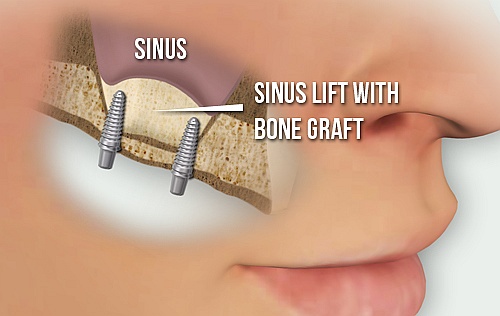
How a Sinus Lift Works
- A 3D scan measures the bone height beneath the sinus.
- Under local anaesthesia, a small access is created in the bone of the upper jaw.
- The delicate sinus membrane is gently lifted upward.
- Graft material is placed in the space created.
- The area is closed and left to heal. Depending on available bone, the implant is placed at the same visit or after a healing period.
How Long Does Healing Take?
Healing varies with the size of the graft, the material and the individual. As a rough guide, many grafts need several months, commonly around four to nine, before an implant can be loaded. Your dentist will confirm healing on follow-up scans rather than by the calendar alone.
Risks and Side Effects
- Swelling, bruising and mild discomfort for several days
- Infection of the graft site
- Tear of the sinus membrane during a sinus lift, which is sometimes repairable at the same visit
- Graft that does not integrate fully, occasionally needing a repeat procedure
- Higher risks with smoking, uncontrolled diabetes and poor oral hygiene
Aftercare
- Take prescribed medicines exactly as directed
- Avoid blowing your nose forcefully or sneezing with a closed mouth after a sinus lift
- Do not press on or lift the lip to inspect the area
- Eat soft, cool foods initially and avoid smoking
- Attend every review and follow-up scan
Plan Your Implant Properly
If you have been told you lack bone for an implant, that isn't always the end of the road. Book a 3D assessment at Dr. Kashi's Ashwathi Dental Clinic, Trivandrum, and get a clear plan.
General information only. A clinical examination and scan are needed for personal advice.