
Understanding Bad Breath: Causes, Treatment, and Prevention
Bad breath, or halitosis, is one of the most common - and most embarrassing - dental concerns people bring up. The good news is that in most cases, it's easily explained and even more easily treated. Here's what causes it, why it happens, and when it's time to see a dentist.
What is Bad Breath?
Bad breath is a persistent, unpleasant odor coming from the mouth that doesn't go away with normal brushing or a mint. Occasional bad breath after a garlicky meal or first thing in the morning is completely normal. Chronic bad breath, however, usually points to an underlying cause that needs attention rather than just masking.
Why does Bad Breath happen?
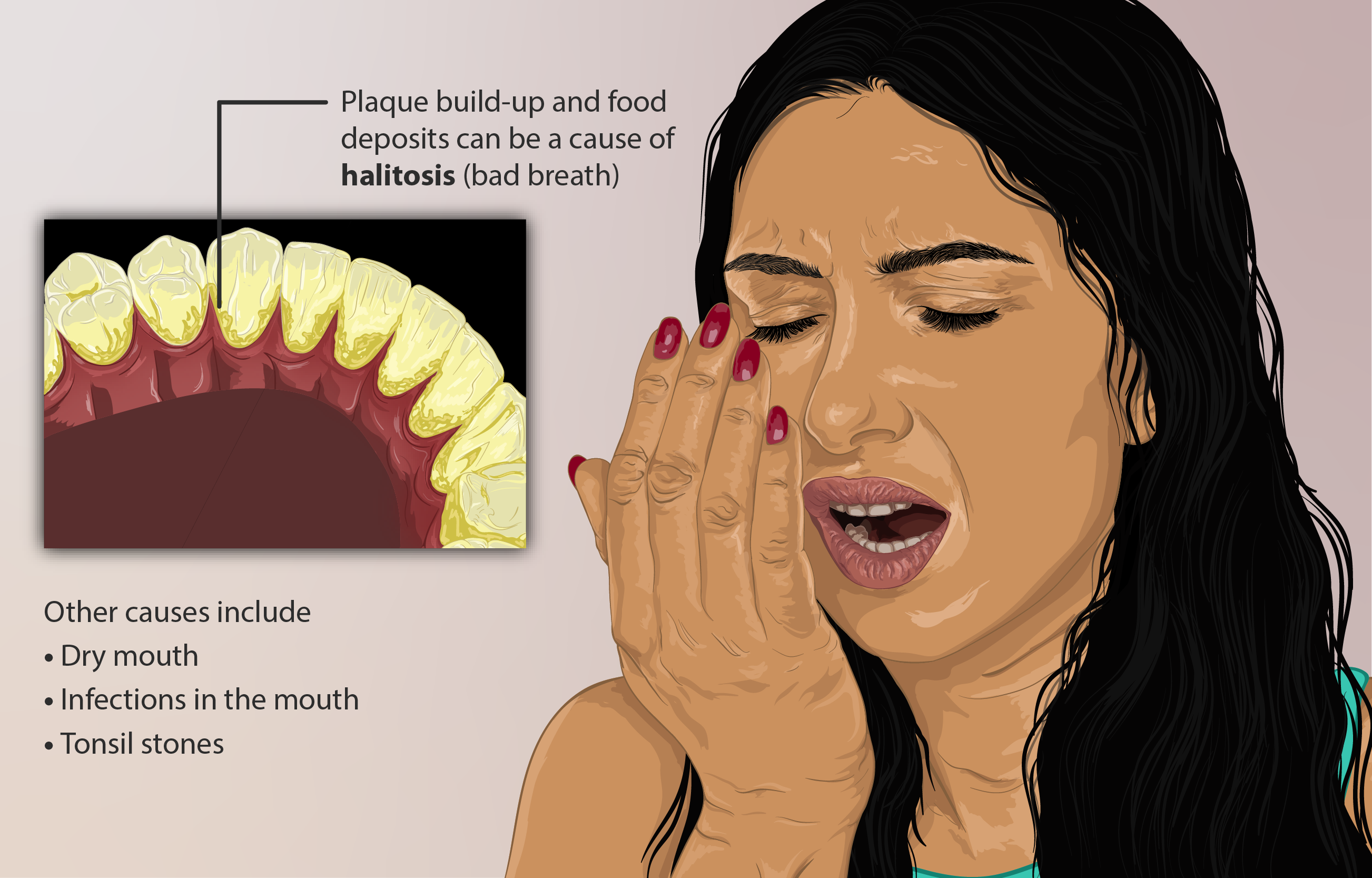
Bad breath is most often caused by bacteria in the mouth breaking down food particles and producing sulfur compounds. Common contributors include:
- Poor oral hygiene —leftover food particles and plaque allow odor-causing bacteria to build up, especially on the tongue
- Dry mouth — saliva naturally washes away bacteria and food debris; reduced saliva flow (from certain medications, mouth breathing, or medical conditions) lets odor build up
- Gum disease — infected or inflamed gums are a major source of persistent bad breath
- Tooth decay and cavities — decayed areas trap bacteria and debris
- Food and drink — onions, garlic, coffee, and alcohol contain compounds that linger in the bloodstream and are released through breath
- Tobacco use — smoking or chewing tobacco causes its own distinct odor and dries out the mouth
- Underlying health conditions — sinus infections, acid reflux, diabetes, and certain respiratory conditions can all contribute to chronic bad breath
- Old dental work — ill-fitting dentures, bridges, or crowns can trap food and bacteria
When Should You See a Dentist?
You should schedule a visit if:
- Bad breath persists despite regular brushing, flossing, and tongue cleaning
- You notice a metallic or unusual taste alongside the odor
- Your gums bleed, are swollen, or feel tender
- You have dry mouth that doesn't improve with hydration
- Bad breath is accompanied by other symptoms like tooth pain or visible decay
A dentist can pinpoint whether the cause is oral (most common) or whether it warrants a referral to a physician for an underlying medical condition.
How is Bad Breath Treated?
Treatment depends on the root cause:
- Professional cleaning (scaling and polishing) to remove plaque and tartar buildup
- Treatment of cavities or gum disease if either is contributing
- Tongue cleaning guidance, since much of the bacteria causing odor sits on the back of the tongue
- Adjustment or replacement of ill-fitting dental work
- Saliva-stimulating recommendations for people with chronic dry mouth
- Referral to a physician if the cause appears to be sinus, digestive, or another non-dental condition
Prevention Tips
- Brush twice daily and floss once a day to remove food particles and plaque
- Clean your tongue with a tongue scraper or your toothbrush
- Stay hydrated to keep saliva flow steady
- Limit odor-causing foods and drinks, or follow them up with water and brushing
- Avoid tobacco products
- Replace your toothbrush every 3–4 months
- Keep up with 6-monthly dental check-ups and cleanings so early issues are caught before they cause odor
Visit Dr. Kashi's Ashwathi Dental Clinic
Persistent bad breath is almost always treatable once the cause is identified. Our team can assess your oral health, address any underlying issues, and help you breathe easy with confidence. Book a consultation at Dr. Kashi's Ashwathi Dental Clinic today.