
Apicoectomy and Root Canal Retreatment
Saving a Tooth After a Failed Root Canal
A root canal is meant to be a lasting fix, and usually it is. But sometimes a treated tooth becomes painful again, develops a gum boil, or shows a persistent shadow on X-ray. That does not automatically mean extraction. Two advanced options can often save the tooth: retreatment and apicoectomy.
Why Can a Root Canal Fail?
• Missed or untreated canals: molars in particular have complex, narrow canals
• Incomplete cleaning or filling of the canal system
• New decay or a leaking crown or filling, letting bacteria back in
• A crack or fracture in the root
• Persistent infection at the root tip that the first treatment could not reach
• Delayed restoration of the tooth after the root canal
Failure can happen months or many years later, and sometimes shows up only on a routine X-ray.
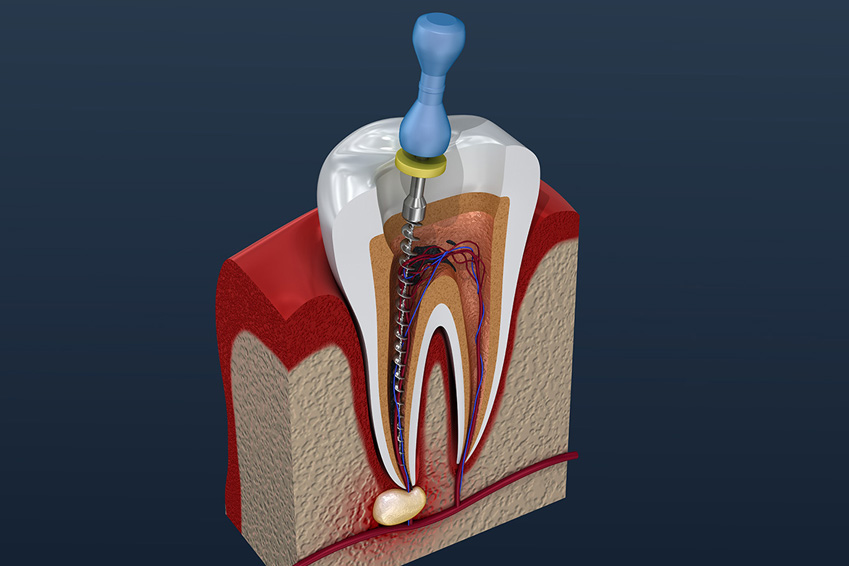
Option 1: Non-Surgical Root Canal Retreatment
The dentist reopens the tooth, removes the old filling material, looks for missed canals, cleans and disinfects the system again, and refills it. A new crown or filling is usually placed afterwards. Retreatment is generally tried first, when the tooth can be accessed and the structure is sound.
Option 2: Apicoectomy (Root-End Surgery)
If retreatment cannot solve the problem, or is not possible, an apicoectomy may be recommended.
- Local anaesthesia is given.
- A small incision is made in the gum to reach the root tip.
- The infected tissue and about the last few millimetres of the root are removed.
- The end of the root canal is cleaned and sealed with a biocompatible filling material.
- The gum is stitched and healing begins. The bone gradually regrows around the root.
Modern apicoectomy is often done with magnification and specialised instruments to improve precision.
Save Your Tooth, If It Can Be Saved
Don't ignore lingering pain or gum swelling around a root-filled tooth. Book a consultation at Dr. Kashi's Ashwathi Dental Clinic, Trivandrum, for a proper diagnosis.