
What are Dental Crown
Dental crowns, sometimes referred to as dental caps, are prosthetic devices that are used to cover a damaged, decayed, or aesthetically compromised tooth. They encase the entire visible portion of the tooth above the gumline, restoring its shape, size, strength, and appearance. Dental crowns are custom-made to fit each patient's tooth precisely, providing a durable and long-lasting solution for various dental problems. Here are some key points about dental crowns:
Purpose:
Dental crowns are used to strengthen and protect weak or damaged teeth, restore teeth that have undergone significant decay or fracture, support large fillings when there isn't enough tooth structure remaining, cover dental implants, improve the appearance of misshapen or discolored teeth, and anchor dental bridges in place.
Materials:
Dental crowns can be made from various materials, including metal alloys (such as gold or silver-colored alloys), porcelain-fused-to-metal (PFM), all-ceramic or all-porcelain, and zirconia. Each material has its own advantages and considerations in terms of strength, aesthetics, durability, and biocompatibility.
Types of Dental Crowns
Metal Crowns:
AThese crowns are highly durable and resistant to wear, making them suitable for back teeth. They have a metallic appearance, which may not be preferred for front teeth.
Porcelain-Fused-to-Metal (PFM) Crowns:
PFM crowns combine the strength of a metal base with the aesthetics of tooth-colored porcelain. They are suitable for both front and back teeth.
All-Ceramic or All-Porcelain Crowns:
These crowns offer excellent aesthetics, as they closely resemble natural teeth in color and translucency. They are often used for front teeth.
Zirconia Crowns:
Zirconia crowns are known for their strength, durability, and aesthetic appeal. They are suitable for both front and back teeth and offer superior biocompatibility.
Dental Crowns Procedure
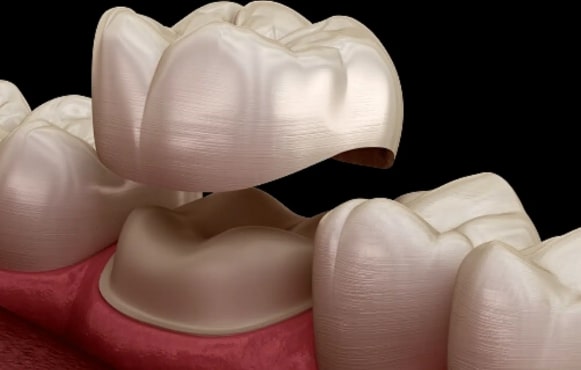
The dental crown procedure typically involves multiple steps, including tooth preparation, impression taking, crown fabrication, and crown placement. The tooth is prepared by removing any decayed or damaged areas and shaping it to accommodate the crown. An impression of the prepared tooth is then taken, and a custom-made crown is fabricated in a dental laboratory. Once the crown is ready, it is cemented onto the prepared tooth, restoring its function and appearance.
Benefits of Dental Crowns
Dental crowns provide several benefits, including strengthening and protecting weakened teeth, improving the appearance of damaged or discolored teeth, restoring normal chewing and speaking function, preventing further decay or damage, and enhancing overall oral health and confidence. Overall, dental crowns are versatile restorative solutions that can effectively address a wide range of dental issues, helping patients achieve healthy, functional, and aesthetically pleasing smiles.